These dollar store items can help with stress in situations which may cause you anxiety – Have these items nearby to help reduce anxiety and improve focus –
Breath mint & Hand lotion
Breath mints can be grounding tools, once you put it in your mouth try to focus on the taste and coolness.
This also works with hand lotion – as you put it on focus on how it feels on your skin. This works with both scented and unscented cream.
Stress Balls
Stress balls can help alleviate nervous energy. Try rolling the ball across your leg or arm, or squish it between your hands.
Try a variety of squish balls, such as balls that are heavier in weight, different textures, and ones that make noise to see what works best for you.
Coil bracelets and Rubber Bands!
If you are distracted easily try wearing elastic bands or coil bracelets on your wrists. The snapping of the rubber bands can help decrease unwanted thoughts, alleviate anxiety and help you focus.
Cold Water & Ice Pack
If you become overwhelmed, overheated, or if you feel dizzy, light headed, irritated, or anxious, try an ice pack or drink a cold glass of water. The reason for the cold water and/or the cold ice pack is that the temperature change can bring down your emotional stress level.
Self Soothe Kit
In this video, Alexander explains how to create your own kit of self soothing tools.
Sharing information about your history, struggles and things that help you, will support your ability to self advocate. This information is important to educate your support circle or legal counsel. While it may feel embarrassing, overwhelming or scary to share information, it will help ensure you get fair and equal access to justice and legal support. Talk to your lawyer about what kind of information will be helpful in your legal process. Below are some questions to help you think about what you need. Make notes and bring it to your lawyer’s appointment so they can better understand how to share information with you.
Never submit sensitive information such as passwords. Report abuse
Do you need access to my medical file and/or support agencies?
Do I need to give you permission to speak to my medical professionals or social service providers?
What about character witnesses?
What are the steps throughout the process?
How much will it cost to handle my case?
Is there anything I can do to keep the costs lower?
What are my payment options?
What is the best way for me to keep in touch with you?
How will you get in touch with me (remember to list your preferred methods – for example, ask that items not be mailed to you, if you forget to collect or open your mail).
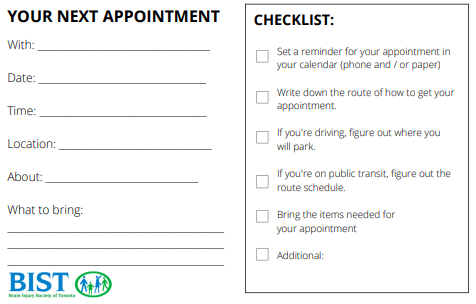
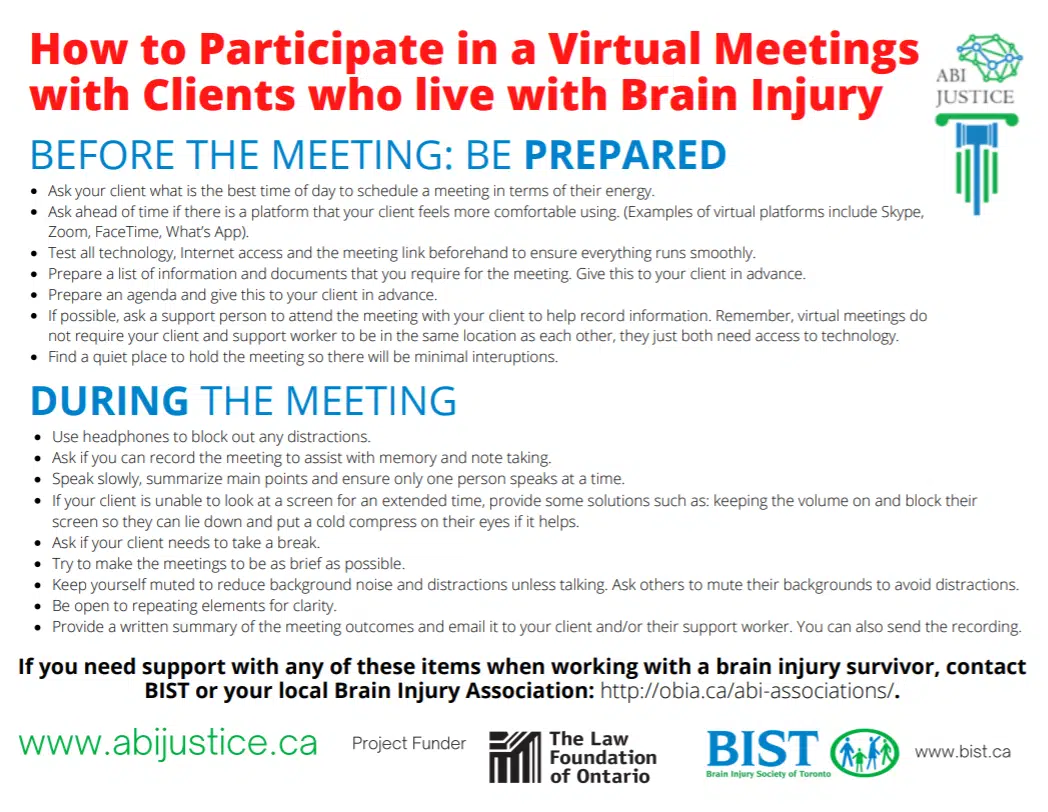
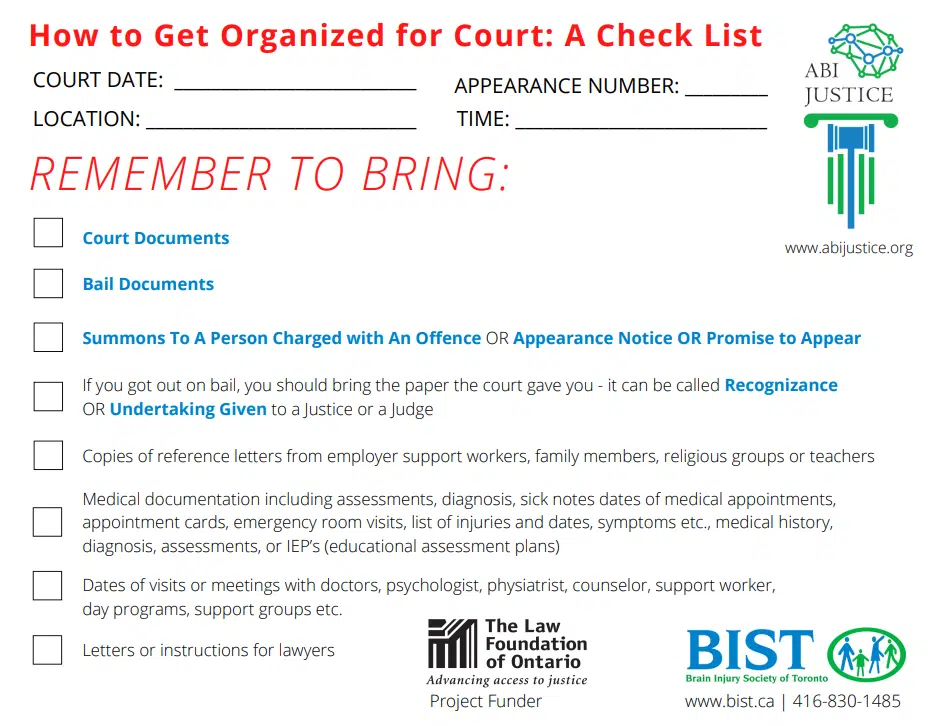
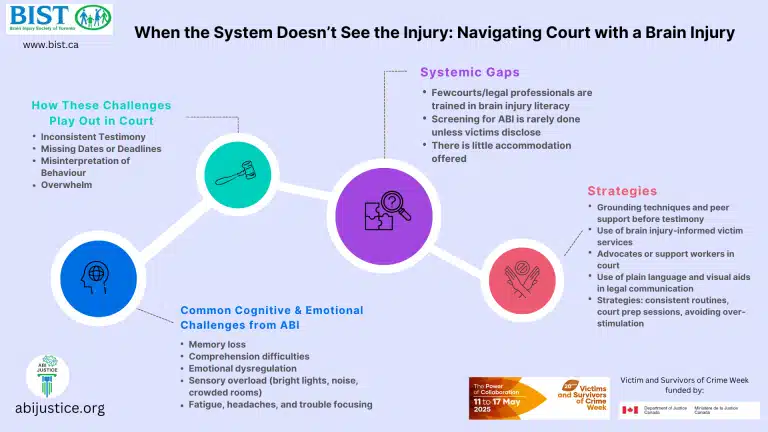
The printable tools on this page are designed to reduce pressure and support clarity. They help break down complex situations into manageable steps, so you can focus on what matters most at each stage.
They can support you to:
Stay organized
Reduce stress and confusion
Remember key information
Feel more confident in legal settings
Download our Navigating the Justice System Infographics
Click on each thumbnail to see a larger image open in a new window. Right click and select ‘Save Image As’ to download.
We are creating a provincial database of legal professionals who are knowledgeable on the intersection of brain injury and the justice system.
If you are interested in becoming a part of this database, please provide your contact details for more information and further training opportunities.